
God Moves Bodies
David's ecstatic dance and a spirituality of movement

God’s presence evokes movement among bodies. And this week I’m thinking about dancing.
There’s a story in the book of Second Samuel in which the king—David—completely lets loose dancing in worship: “And David danced before the Lord with all his might” (2 Samuel 6:14).
David dances with fervor and freedom. This is one of my favorite passages of the Bible because it shows a male authority figure free in his body, dancing with unadulterated ecstasy. The vulnerability of David moving freely—leaping and dancing—is enough to make some blush, and enough to fill others with resentment.
In the passage, David is a political leader who leads the people and the armies as a unified nation. Like many other ancient kings, he also functions as ritual leader or priest: He offers sacrifices to God, he wears a linen ephod, which was basically a very revealing loincloth worn by priests, and he guides the people in movement: a response to God’s presence among the people. In this passage, there are songs, lyres, harps, tambourines, castanets, and cymbals. All of ancient Israel, led by an almost-nude King David, is dancing before the Lord with all their might. There are sweat, tears, instruments, and people falling over in the dirt, hands upraised.
This is not your typical Sunday morning church service—or at least not mine.
Ecstatic movement is seen in various instances throughout the Hebrew Bible. David’s dance echoes a story of former King Saul, when Saul still hung out with the wild-eyed prophet Samuel. It says in 1 Samuel 19:24: “As Saul was going, he fell into a prophetic frenzy, until he came to Naoith in Ramah. He too stripped off his clothes, and he too fell into a frenzy before Samuel.”
Saul, like David, experienced this ancient Yaweh trance dance.
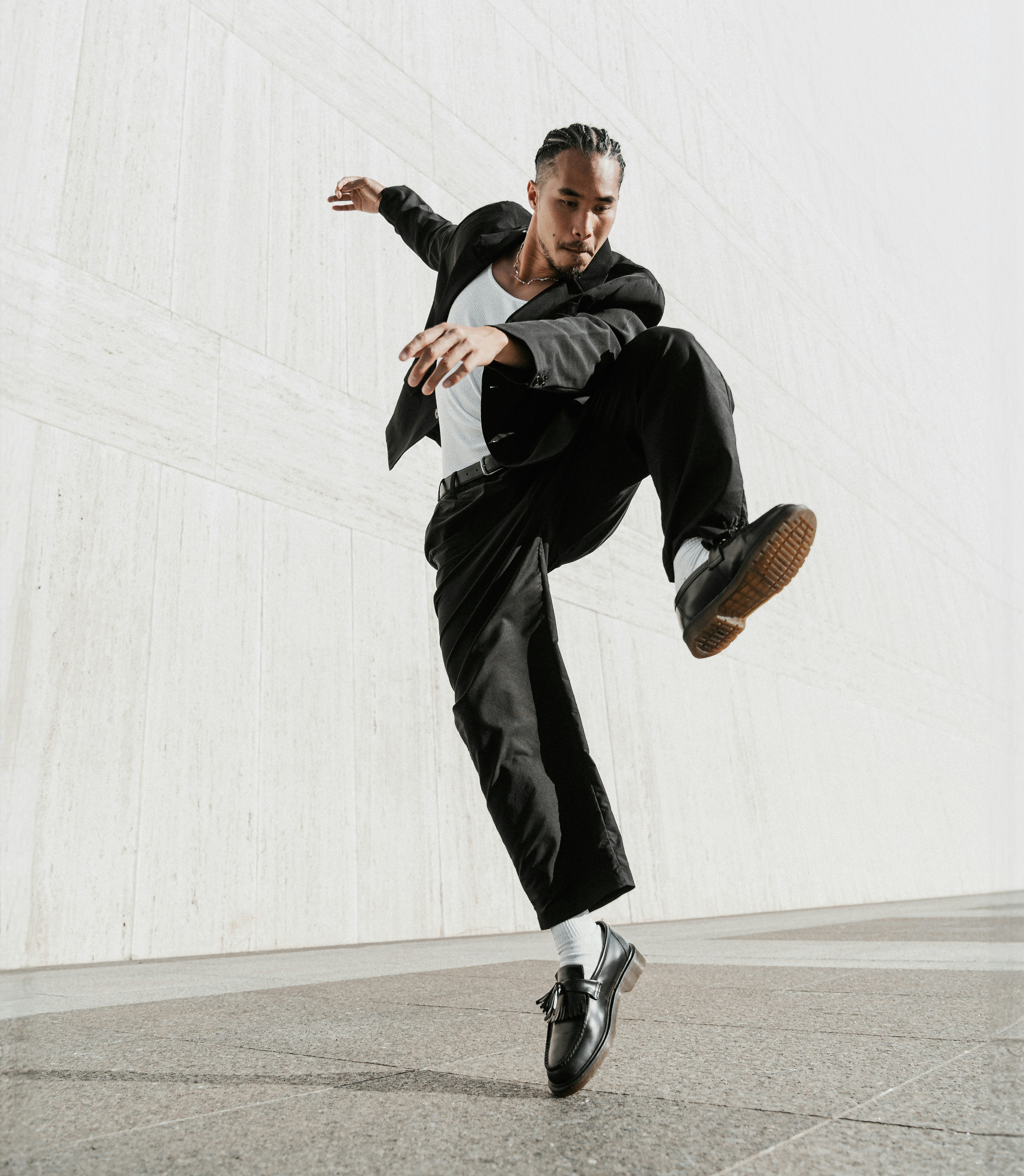
Photo by Karsten Winegeart on Unsplash
And in Exodus 15:20, directly after Israel is liberated from their oppressors in Egypt, we find this beautiful passage: “Then the prophet Miriam, Aaron’s sister, took a tambourine in her hand; and all the women went out after her with tambourines, and with dancing. And Miriam sang to them: “Sing to the Lord, for he has triumphed gloriously; horse and rider he has thrown into the sea.”
Dance is clearly a major part of ancient Israelite worship, just as it is for almost all tribal-based cultures and religions. And yet, except for Pentecostalism, it’s been lost in Christian churches as a valid form of worship. Of course, the sacredness of dance will not be eclipsed in culture, even though we don’t typically think of dance events like raves as a chance for transcendent praise (but they are).
Why is this?
We are too captivated by our towers of rational thought instead of giving praise with the rest of our bodies.
Do we have the courage to forsake our rational mind—or really, just balance it out with the rest of our body—to experience God?
And finally, David, further acts out the ritual role of priest by feeding the people. He offers the sacrifices to God, and then hosts a vast, collective meal. In 2 Samuel, 6:18-19, the people dance their hearts out, and then they eat:
When David had finished offering the burnt offerings and the offerings of well-being, he blessed the people in the name of the Lord of hosts, and distributed food among all the people, the whole multitude of Israel, both men and women, to each a cake of bread, a portion of meat, and a cake of raisins.
That sounds like a lot of people, and a good meal, too!
It seems that on many occasions when people experience God in the Bible, they end up eating together. This is, on one level, a profound and simple Eucharistic theology primer. When God shows up, share a meal. It prefigures Jesus feeding multitudes in his ministry, and the ritualized Eucharist that Christians practice today. In many ways, the Eucharist is simply God’s potluck, but God cooks the largest and best dishes all the time. All are invited. God is the ritual host, and we—like the multitudes of ancient Israel—just show up, party, and receive.
Have a great week, everyone.
For many years, I belonged to a liturgical dance group (that did, at least for a time, include one man!). I didn't love that our presence in worship was treated as a performance, though. Then I led Embodied Prayer sessions, workshops, liturgies where everyone was a participant. It's such an important part of bringing our whole self to God. Thank you for bringing this forward.
Cyprian Consiglio noted that "the Christian tradition teaches us what NOT to do with our bodies, rather than what to do with our bodies"