
Back to Babylon
Exploring Revelation's most troubling chapters—and how to read them responsibly

Let’s return to the book of Revelation for Lent. As longtime readers of this Substack know, I started writing about apocalypticism and the book of Revelation on a weekly basis right around when COVID hit. Those truly felt like apocalyptic times, in which city streets mirrored the eerie silence of zombie-ridden, end-of-the-world films like 28 Days Later. Eventually, I slowed down in my Revelation commentary. I had a book come out. I occasionally dipped my toes into the apocalyptic waters of Scripture, but mostly I wrote about prayer, contemplation, and the like.
Amidst it all, the apocalyptic tenor of our times continues—look no further than each day’s headlines, from ICE’s reign of terror, to the Epstein files’ endless revelations, to the Trump Administration’s Environmental Protection Agency (EPA) officially ignoring scientific findings that climate change harms people and the environment. These are times that feel Orwellian, in which “protection” means harm and “truth” from government mouthpieces distorts reality.
I am still drawn to the shocking symbols of the Bible’s last book, along with all the parts of the sacred texts that Christians ignore. What do the beasts, dragons, angels, and trumpets of Revelation all mean? I’m not a biblical scholar, but I read biblical scholars, and the more down the rabbit hole of Revelation I go, the more fascinating and troubling it all becomes. I don’t promise answers, but questions open upon questions, as visions in the book unfold one after another.
We have Stranger Things-like monsters—Demogorgon and Vecna equivalents—in Revelation, so why have we avoided this book for so long? The reasons are understandable: It’s probably the most disturbing book in the Bible, surely rated “R” or “NC-17” and landing in a genre mix of surrealist-fantasy-horror. It’s also one of the most abused books of the Bible. Fundamentalists sidestepped the book’s blatant anti-imperial message and used it instead to decode end-times disasters and an escape plan from earth into a projected heavenly, rapturous reality. Many evangelical Christians suffering from religious trauma have experienced a particular form of end-of-the-world terror, such as waking up to find their parents out of the house and thinking that Jesus had returned. They thought they were “left behind” after the heavenly transport of the saved.
So, it’s back to Revelation we go. Because the monstrous power of empire still dehumanizes. Because people of conscience are looking for all sorts of ways to remain human in the midst of systems that degrade dignity. Because contemplation and resistance go together, and because the Bible carries spiritual wisdom that subverts unjust power.
Another reason I’ve delayed writing about Revelation for a while, frankly, is because I’ve been stuck on the disturbing chapters 17 and 18 that feature the “whore of Babylon.” How does one write responsibly about a misogynist, abusive metaphor, if one writes about it at all?
When we approach an image of Babylon, first of all, we are meant to assume that John is referring to the Roman Empire. The Babylonians destroyed the Jewish Temple and sent the Judeans into exile (587/86 BCE)—and the Romans destroyed the Second Temple in 70 CE. Rome’s violence stirred biblical, historical memories for Jewish and new Christian/gentile readers, as if to say: “We know what this is. This is Empire. This is Babylon.”
Peeling back some of the meanings of this metaphor reveals some of the most radical critiques of economic injustice in the Bible, all while the misogynistic metaphor remains firmly in place and unchallenged in the text. I do not endorse this metaphor or find it redeemable. There’s no way to sanitize it: the Bible itself is a story of liberation, but it contains texts of terror, and these chapters of Revelation are among them. But neither do I believe avoidance of terror texts is helpful. The only way forward, it seems to me, is through the text, with fear, trembling, and healthy doses of prayer. To that end, I’ll be writing about these most difficult of chapters in the Bible for several weeks.
“Come, I will show you the judgment of the great whore who is seated on many waters, with whom the kings of the earth have committed fornication, and with the wine of whose fornication the inhabitants of the earth have become drunk.”
—Revelation 17:1-2
To “whore” in the Bible is not about individual behavior. It’s about collective allegiance—how the people of ancient Israel remained true to their commitment to God, or how they became seduced by empire. To “whore” in the Bible is about the allegiance and direction of one’s life embedded in social systems. Ancient Israel “whored” when they made political alliances with the empires around them: “You played the whore with the Egyptians, your lustful neighbors… You played the whore with the Assyrians… You multiplied your whoring with Chaldea, the land of merchants” (Ezekiel 16:26, 28-29). Often, the Hebrew prophets link “whoring” to unjust economic practices. Isaiah aims his barbed words toward the ancient trading port of Tyre, “She will return to her trade, and will whore herself with all the kingdoms of the world” (Isaiah 23:17).
At the same time, I am following a particularly insightful reading of the “whore of Babylon” metaphor by scholar Averen Ipsen, who insists that we cannot separate sexual and material reality from metaphorical reality when reading the Bible. She read Revelation 17-18 with activist sex workers for her academic dissertation and found that they unanimously experienced the whore of Babylon image as misogynist, communicating a “kill the whore” message. Here are the thoughts of one sex worker named Veronica, quoted by Ipsen:
This chapter reminds me of being blamed for everything, for whatever is going on: serial killers, drugs, crime, bad neighborhoods, drug problems, moral decay for the family, husbands cheating on their wives; that’s all laid at the feet of the whore, spread of STD’s, we’re blamed for everything. (Ibsen, 180).
To my mind, Veronica is reading it rightly: in chapters 17-18, John of Patmos, the author of Revelation, pictures the Roman Empire as the “whore” of the mythic city Babylon and then experiences a vision in which that city is violently devastated. It’s a brutal image of sexualized violence in the Bible, morally indefensible in my view, and it participates in scapegoating of women and sex workers. I will have Veronica’s critique in my heart and mind as I write.
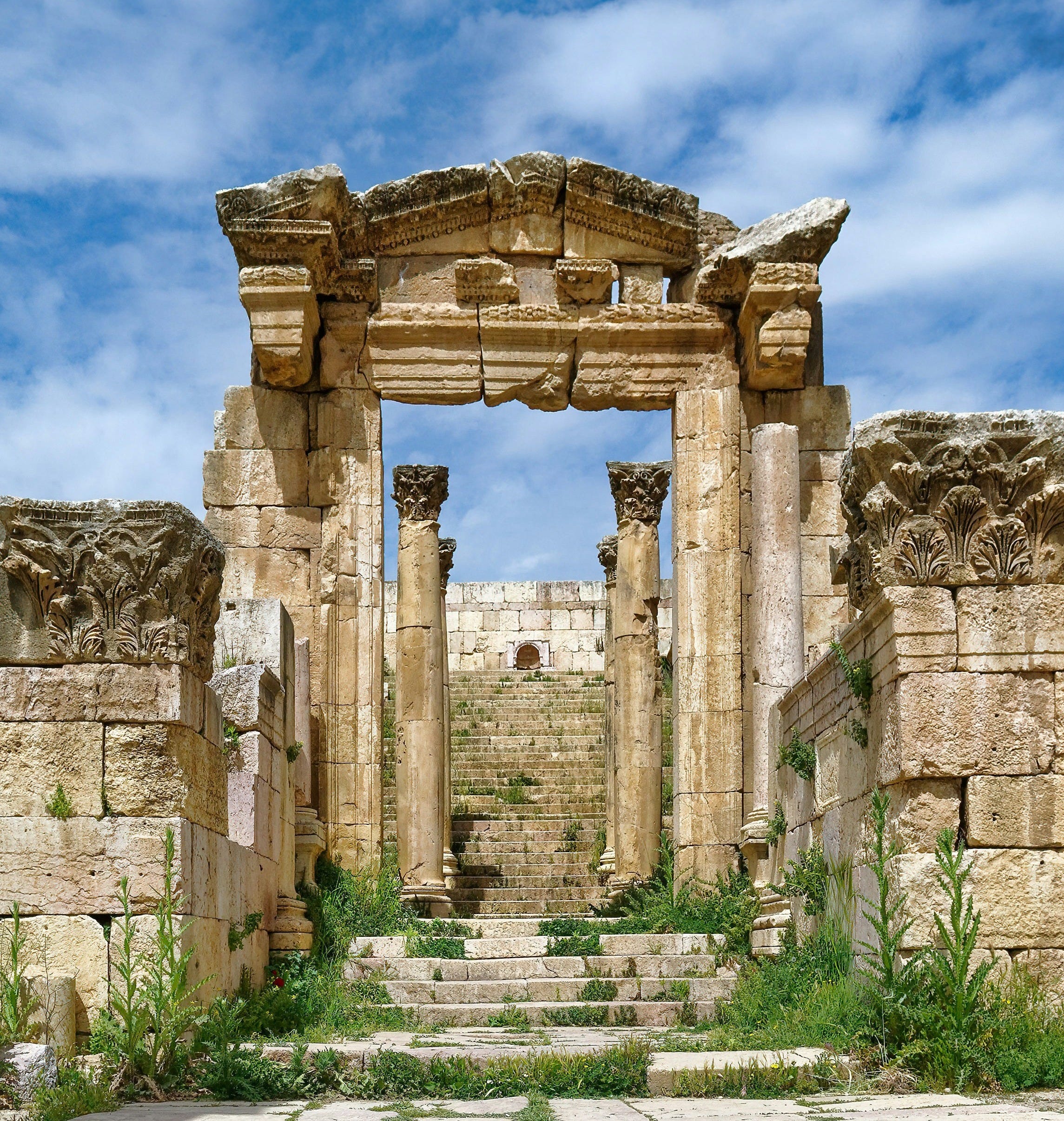
Photo by Andreas Brunn on Unsplash
To be continued…
Note: If you signed up for “holy ordinary” posts about prayer and contemplation but the daily news is all the apocalypse you can handle, I get it. You can manage your newsletter preferences by clicking “unsubscribe” at the bottom of this email, which leads you to a page where you can elect not to receive “Revelations” emails but still receive everything else. Also, given how quickly comment sections on difficult topics can escalate, I’m limiting comments for the next several weeks to paid subscribers. I’ll also be opening the Substack chat to paid subscribers, where we can engage one another thoughtfully.
really well done. The book is so mishandled that a reading of it to last the ages is right on time. Thank you-- a million.